
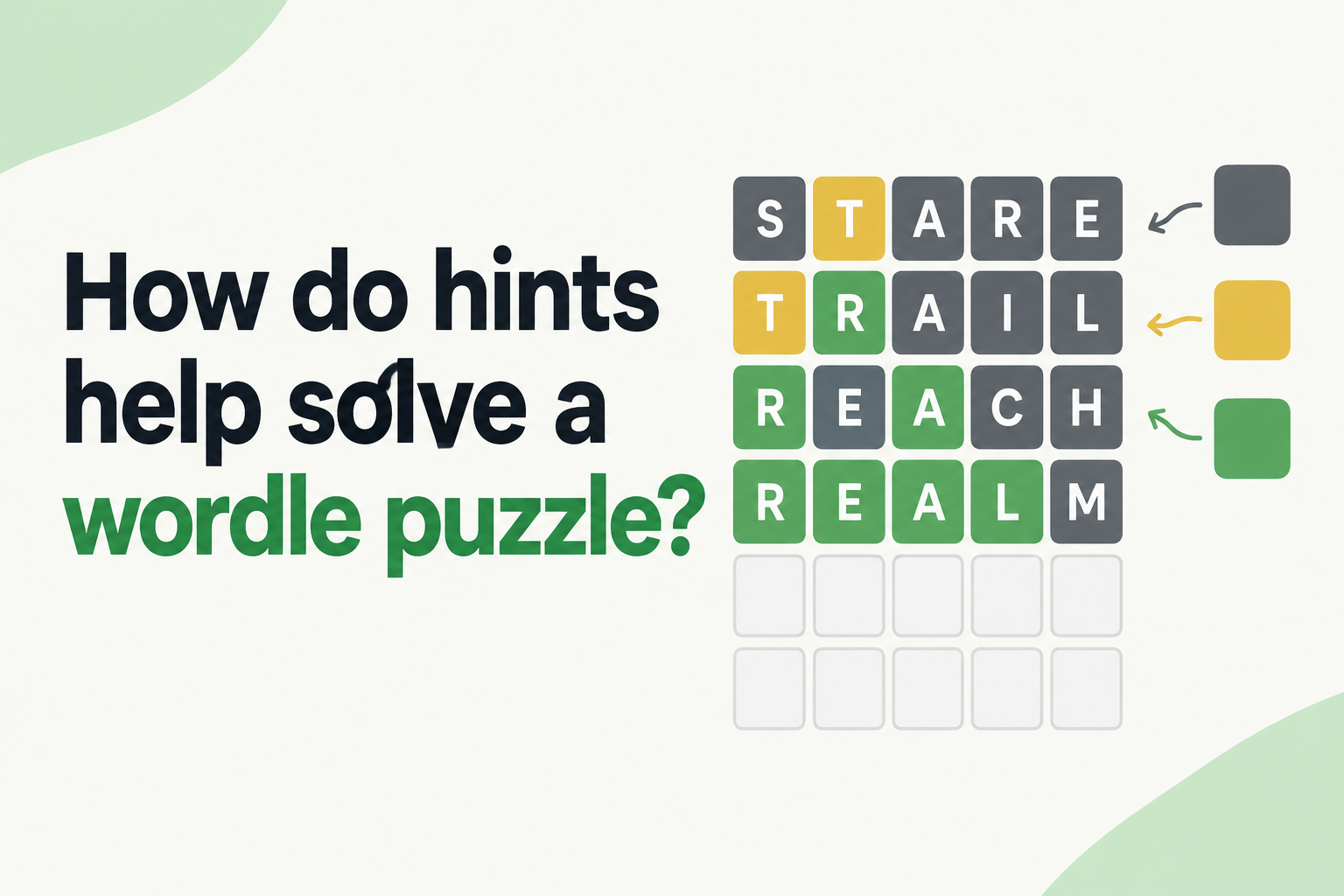
Hints help solve a Wordle puzzle by turning each guess into useful evidence. Instead of treating the game as a lucky search for a five-letter word, you can use the colored tiles to narrow down the answer step by step. A green tile confirms both a letter and its position, a yellow tile confirms a letter but tells you it belongs somewhere else, and a gray tile usually removes a letter from consideration. The best players do not simply notice these clues; they organize them and let them guide every later guess. This article explains how Wordle hints work, why they matter, how to use them efficiently, the mistakes that waste guesses, and practical strategies for solving more puzzles with confidence.
How Wordle Hints Work
Wordle gives feedback after every guess. That feedback is the puzzle’s hint system, and each color carries a different level of certainty. Reading the colors correctly is the foundation of a strong solving method.
1. Green Tiles Confirm Exact Matches
A green letter is the clearest hint available. It means the letter appears in the answer and is already in the correct position. Keep that letter fixed in future guesses unless you have made an input mistake.
2. Yellow Tiles Confirm Useful Letters
A yellow letter belongs in the answer, but not where you guessed it. Move it to a different position on the next attempt. Yellow hints become more valuable when you compare them across several guesses.
3. Gray Tiles Remove Many Options
A gray tile usually means the letter is not in the target word. Avoid using it again unless duplicate-letter rules create a reason to recheck it. Removing poor options quickly makes later guesses more focused.
4. Letter Position Matters As Much As Letter Choice
Knowing that a letter exists is helpful, but knowing where it belongs is even better. A puzzle becomes easier when green and yellow tiles reveal a pattern such as _ A _ E _.
5. Repeated Letters Need Extra Care
A word can contain the same letter more than once. If one copy is green or yellow and another is gray, the answer may contain only one copy. Read the entire row instead of judging each tile alone.
6. Each Guess Should Add Information
A useful guess either tests new letters, checks likely positions, or confirms a word pattern. A guess that repeats rejected letters and ignores known clues gives away a valuable chance.
Why Hints Make Wordle Easier
Hints reduce uncertainty. Every correct interpretation shrinks the number of possible answers and helps you make smarter choices rather than random guesses.
1. They Turn Guessing Into Deduction
Without hints, Wordle could feel like choosing words from a huge dictionary. With hints, every attempt gives you information that limits the possible answers and creates a logical path forward.
2. They Reveal Letter Frequency
Early guesses can show which common letters are present or missing. Discovering letters such as A, E, R, S, T, and L often helps players identify likely word structures faster.
3. They Help Build Word Patterns
Once a few letters are confirmed, you can see the word as a pattern rather than a blank space. For example, _ R A _ E suggests a much smaller group of possible words than five empty positions.
4. They Prevent Repeated Errors
Gray hints tell you which letters should no longer guide your thinking. Ignoring those eliminated letters reduces the chance of repeating weak guesses and keeps your attention on stronger candidates.
5. They Improve Guess Efficiency
The best Wordle hints help you make each guess do more than one job. A single word can test several untried letters while also checking whether known letters fit a likely arrangement.
6. They Build Confidence Under Pressure
When only one or two attempts remain, it is easy to panic. Following the evidence already on the board gives you a clear process and reduces the temptation to make a rushed, unsupported guess.
A Practical Process For Using Wordle Hints
A steady process is more reliable than relying on instinct alone. Use the board as a record of facts, then make each new choice based on those facts.
1. Start With A Balanced Opening Word
Choose an opening word with common vowels and frequently used consonants. A word such as “stare” or “crane” can test several high-value letters at once and often produces useful early hints.
2. Record Green Letters Immediately
Treat green letters as fixed anchors. Keep them in the same position during future guesses and focus on filling the remaining blanks with letters that match the evidence.
3. Relocate Yellow Letters Carefully
A yellow letter cannot stay in its previous position. Try it in a new location while testing other likely letters. Do not move it randomly; consider common English word patterns.
4. Exclude Gray Letters From New Guesses
Gray letters should usually disappear from later guesses. Reusing them wastes space that could test new possibilities, especially in the first few rounds when information is limited.
5. Test New Letters Before Chasing One Answer
If you have only one or two confirmed letters, test several new letters in a single valid word. This can reveal more information than guessing a nearly correct answer too early.
6. Review Duplicate-Letter Possibilities
When a likely word does not fit the colors, consider whether it contains a repeated letter. This is especially useful when a known letter appears once but the remaining pattern still feels incomplete.
7. Choose The Most Informative Final Guess
Near the end, compare all remaining candidates. If several words fit the same pattern, use a guess that separates them by testing their different letters whenever the game allows it.
Examples Of Wordle Hints In Action
Examples show why the colors should be read together. A single tile is helpful, but the full history of your guesses tells the real story.
1. A Green Vowel Creates A Strong Anchor
Suppose your first guess shows E as green in the fourth position. You now know every future candidate must follow the pattern _ _ _ E _. That simple placement can remove many possible words.
2. A Yellow Letter Changes The Search
If R appears yellow in the first position, R belongs somewhere in the answer but not at the start. You can then test it in the middle or near the end while adding fresh letters around it.
3. Several Gray Letters Save Attempts
Imagine that A, E, S, T, and R all turn gray. Although that may feel disappointing, it is powerful information. You can stop considering many common words and search a much smaller letter pool.
4. A Pattern Can Expose A Common Ending
If you know the word ends in OUND, only the first letter remains uncertain. Instead of guessing several full answers without thought, consider which opening letters create valid candidates and test them strategically.
5. Duplicate Letters Explain Mixed Colors
Suppose you guess “cocoa” and receive one positive result for O but another gray O. The answer may contain only one O. Mixed results often signal that duplicate-letter logic matters.
6. A Probe Word Can Break A Tie
If the pattern is _ A _ _ E and several words seem possible, a probe word using likely differing letters may be better than choosing one candidate immediately. It can reveal the right branch before your final guess.
Common Wordle Hint Mistakes To Avoid
Players often lose not because the answer is impossible, but because they misread or underuse the information already available.
1. Ignoring A Green Letter
Moving or replacing a green letter throws away confirmed information. Keep it in place and use the remaining spaces to test possible completions.
2. Reusing Gray Letters Without A Reason
Using a gray letter again usually adds no value. Unless you are checking a duplicate-letter situation, replace it with an untested letter that can reveal something new.
3. Leaving Yellow Letters In The Same Position
A yellow tile specifically tells you that the letter is misplaced. Repeating it in that same location cannot produce a new result and may cost you an important guess.
4. Guessing Familiar Words Too Soon
A common word can feel convincing, but familiarity is not evidence. Before entering it, check whether every letter and position matches the color clues already shown.
5. Forgetting About Double Letters
Many players assume every letter appears only once. When a puzzle resists obvious answers, test the possibility of repeated vowels or consonants instead of forcing an incorrect single-letter pattern.
6. Focusing Only On Vowels
Vowels are useful early, but consonants often distinguish one candidate from another. A balanced guess gives more complete information than a word built mainly to test vowels.
Best Practices For Solving Wordle With Hints
Good Wordle habits make the hint system easier to use and help you stay calm when a puzzle becomes difficult.
1. Separate Facts From Possibilities
Green and yellow tiles are facts. A word you think might fit is only a possibility. Keep that distinction clear so a favorite guess does not override the evidence.
2. Use Common Letter Combinations
English words often use familiar pairs and endings, such as CH, SH, TH, ING, ER, and ED. Once you know a few letters, these patterns can help you place them naturally.
3. Preserve Information In Every Guess
Do not choose a word merely because it sounds plausible. Ask what it will test: a new letter, a new position, a repeated letter, or a likely ending.
4. Watch The Keyboard And The Grid
The keyboard gives a quick summary of eliminated and confirmed letters, while the grid shows positions and duplicate-letter details. Use both rather than relying on one visual cue.
5. Delay Commitment When Many Answers Fit
If you can see several possible answers, do not automatically pick one. A strategic testing word may distinguish between them and protect your final attempts.
6. Learn From Missed Puzzles
When you miss a Wordle answer, review the point where your reasoning changed from evidence to assumption. This helps you recognize similar traps in future games.
When Hints Are Most Valuable
Hints are useful in every round, but their role changes as the board becomes more specific.
During the first two guesses, hints help you discover which common letters belong in the answer. In the middle of the puzzle, they help you arrange yellow letters, eliminate incompatible patterns, and test likely word endings.
In later rounds, hints become a decision tool. You may already know four letters but still face several possible words. At that stage, the key is not simply finding a word that fits. It is identifying the guess that gives the best chance of separating the remaining options.
Hints are especially valuable on words with repeated letters. They can appear confusing at first, but careful comparison between rows often reveals whether a letter occurs once or more than once.
They also matter when the answer uses an uncommon letter. If several common letters have been eliminated, do not keep guessing familiar patterns. Let the gray tiles tell you that the puzzle may require a less expected option.
Most importantly, hints are useful only when you revisit them. Before every guess, scan the full board and confirm that your chosen word respects every known green, yellow, and gray result.
A Wordle Hint Checklist
Use this quick review before submitting your next guess.
- <strong>Keep Green Letters Fixed:</strong> Make sure every confirmed letter remains in its correct square.
- <strong>Move Yellow Letters:</strong> Check that no yellow letter is repeated in the same position.
- <strong>Remove Gray Letters:</strong> Avoid rejected letters unless duplicate-letter evidence makes them relevant.
- <strong>Test New Information:</strong> Prefer a word that explores untried letters or positions.
- <strong>Check Repeated Letters:</strong> Consider whether the answer could contain two copies of a confirmed letter.
- <strong>Compare Candidate Words:</strong> If several answers fit, choose a guess that helps distinguish them.
Frequently Asked Questions
Do Hints Guarantee A Wordle Win?
Hints do not guarantee a win, but they greatly improve your chances. They give reliable evidence about letters and positions, allowing you to narrow the answer logically. Success depends on reading every clue carefully and using guesses that reveal additional information.
Should I Use Hints On Every Guess?
Yes. Every Wordle guess creates hints, even when no letters turn green. Gray tiles are still useful because they eliminate options. The goal is to use each result before making the next guess instead of treating every attempt as separate.
What Does A Yellow Letter Mean In Wordle?
A yellow letter means that the letter appears somewhere in the answer, but not in the position where you guessed it. Keep the letter in consideration, move it to a new spot, and test which placement works with the remaining evidence.
Why Can A Letter Be Gray And Yellow In The Same Guess?
This often happens with repeated letters. The answer may contain one copy of that letter, while your guess includes two. One tile receives the positive feedback, while the extra copy may appear gray because it is not needed.
Is It Better To Guess New Letters Or Known Patterns?
It depends on the board. Early in the game, testing new letters is often more useful. Later, once several positions are confirmed, guessing words that match the known pattern can be the better choice.
Can Hints Help With Hard Mode?
Yes. Hard Mode makes hints even more important because confirmed letters must be used in later guesses. Careful placement of yellow letters and smart testing of remaining positions become essential when the game limits your choices.
Conclusion
Hints help solve a Wordle puzzle by converting every guess into evidence. Green tiles confirm exact placements, yellow tiles show misplaced letters, and gray tiles remove weak options. Together, these clues help you narrow the answer, recognize patterns, and make more efficient guesses.
The strongest approach is simple: read the full board, respect every confirmed clue, test new information when needed, and stay alert for repeated letters. With practice, Wordle becomes less about luck and more about thoughtful word-solving.